Running a small business is no small feat—juggling leads, managing customer relationships, and closing sales can quickly become overwhelming. That’s where the right Sales CRM software for small business comes in, offering powerful automation, organization, and insight to help you grow smarter, not harder.


Why Sales CRM Software for Small Business Is a Game-Changer

Small businesses operate with limited resources, making efficiency the name of the game. A Sales CRM software for small business isn’t just a luxury—it’s a necessity for staying competitive in today’s fast-paced market. By centralizing customer data, automating follow-ups, and streamlining sales processes, CRM tools empower small teams to achieve big results.
Boosting Sales Efficiency
One of the most immediate benefits of implementing a Sales CRM software for small business is the dramatic improvement in sales efficiency. Instead of relying on spreadsheets or memory, sales reps can access real-time customer data, track interactions, and prioritize high-value leads.
- Automated lead tracking eliminates manual data entry.
- Task reminders ensure no follow-up is missed.
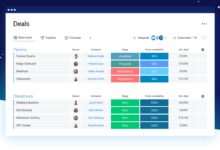
- Deal pipelines provide visual progress tracking.
According to a study by Nucleus Research, businesses gain an average of $8.71 for every dollar spent on CRM, thanks to increased productivity and faster sales cycles (Nucleus Research).
Enhancing Customer Relationships
A CRM isn’t just about closing deals—it’s about building lasting relationships. With a Sales CRM software for small business, every customer interaction is logged, from initial contact to post-sale support.
- Personalized communication based on customer history.
- Automated birthday or anniversary messages.
- Centralized notes for team-wide visibility.
“A CRM turns random customer touches into a structured relationship strategy.” — HubSpot
Top 7 Features to Look for in Sales CRM Software for Small Business
Not all CRM platforms are created equal. For small businesses, simplicity, affordability, and scalability are key. Here are the seven must-have features when evaluating Sales CRM software for small business.
1. Intuitive User Interface
Time is money, especially for small teams. A cluttered or complicated CRM can lead to low adoption rates and wasted training hours. Look for platforms with clean dashboards, drag-and-drop functionality, and mobile accessibility.
- Mobile apps for on-the-go access.
- Customizable dashboards for quick insights.
- Minimal learning curve for new users.
Platforms like Zoho CRM excel in user experience, offering a balance between power and simplicity.
2. Lead and Deal Management
At the heart of any Sales CRM software for small business is lead and deal tracking. This feature allows you to capture leads from multiple sources—website forms, emails, social media—and move them through a defined sales pipeline.
- Automated lead assignment based on rules.
- Customizable deal stages (e.g., prospecting, negotiation, closed-won).
- Lead scoring to prioritize high-potential prospects.
Effective lead management reduces response time and increases conversion rates by up to 300%, according to MarketingDonut.
3. Automation and Workflow Tools
Automation is the secret sauce behind scalable sales operations. The best Sales CRM software for small business includes workflow automation that handles repetitive tasks like sending follow-up emails, scheduling calls, or updating records.
- Email sequences triggered by customer behavior.
- Task creation based on deal stage changes.
- Integration with calendar apps for automatic scheduling.
For example, Salesforce Essentials offers robust automation tailored for small teams, reducing manual workload by up to 40%.
How Sales CRM Software for Small Business Improves Team Collaboration
Sales success isn’t a solo sport. Whether you have a team of three or ten, collaboration is essential. A good Sales CRM software for small business acts as a central hub where everyone—from sales to marketing to support—can access and contribute to customer information.
Shared Customer Database
Imagine a world where one team member doesn’t have to ask another, “Did we follow up with John from ABC Company?” A shared CRM database eliminates information silos.
- All team members see the same customer history.
- Internal notes keep everyone aligned.
- File attachments (proposals, contracts) are stored centrally.
This transparency reduces duplication of effort and ensures consistent messaging across touchpoints.
Role-Based Access Control
While collaboration is important, so is data security. Role-based access ensures that sensitive information is only visible to authorized personnel.
- Sales managers can view all deals.
- Sales reps only see their own leads.
- Support staff access post-sale records without seeing pricing details.
This balance of openness and control is critical for maintaining trust and compliance, especially as your business grows.
Top 5 Sales CRM Software for Small Business in 2024
With so many options on the market, choosing the right Sales CRM software for small business can be overwhelming. Here’s a curated list of the top five platforms based on features, pricing, and user satisfaction.
1. HubSpot CRM
HubSpot CRM is a favorite among small businesses for its free tier, intuitive design, and powerful integrations. It’s perfect for startups and growing teams that want scalability without complexity.
- Free forever plan with core CRM features.
- Seamless integration with email, calendar, and social media.
- Advanced reporting and analytics in paid tiers.
Visit HubSpot CRM to explore its full capabilities.
2. Zoho CRM
Zoho CRM offers a rich feature set at an affordable price. It’s particularly strong in automation, AI-powered insights, and multi-channel communication.
- Zia AI assistant provides sales predictions and suggestions.
- Multi-channel support (email, phone, social, chat).
- Highly customizable workflows and layouts.
Ideal for businesses looking to scale without breaking the bank. Learn more at Zoho CRM.
3. Salesforce Essentials
Salesforce, the CRM giant, offers Essentials—a streamlined version designed specifically for small businesses with up to 10 users.
- 360-degree customer view.
- Mobile-first design with offline access.
- Pre-built templates for common sales processes.
While pricier than some alternatives, its reliability and ecosystem make it a solid long-term investment. Explore it at Salesforce Essentials.
Integrations: Why They Matter for Sales CRM Software for Small Business
A CRM doesn’t exist in a vacuum. Its true power is unlocked when it integrates with other tools your business uses daily—email, accounting, marketing automation, and more. The right integrations turn your Sales CRM software for small business into a central command center.
Email and Calendar Sync
Manually logging emails and meetings is a time-sink. With email and calendar sync, every interaction is automatically recorded in the CRM.
- Gmail and Outlook integration available in most platforms.
- One-click logging of sent emails and calls.
- Meeting scheduling links that sync with your calendar.
For example, HubSpot CRM offers two-way sync with Gmail and Outlook, ensuring no communication gap.
Marketing and Social Media Tools
Modern buyers engage across multiple channels. A Sales CRM software for small business should connect with your marketing stack to track customer journeys from ad click to close.
- Integration with Facebook, LinkedIn, and Google Ads.
- Lead capture from landing pages and forms.
- UTM tracking to measure campaign effectiveness.
Platforms like Zoho CRM offer built-in social media monitoring, allowing you to respond to leads directly from the CRM.
Measuring ROI: How Sales CRM Software for Small Business Pays Off
Investing in technology requires justification. Fortunately, the return on investment (ROI) of a Sales CRM software for small business is both measurable and substantial.
Increased Sales Conversion Rates
CRMs help sales teams close more deals by ensuring timely follow-ups and better lead qualification.
- Automated reminders reduce missed opportunities.
- Lead scoring identifies high-intent prospects.
- Pipeline visibility helps forecast revenue accurately.
A study by Capterra found that 65% of businesses using CRM reported increased sales.
Reduced Operational Costs
By automating repetitive tasks and reducing manual errors, CRMs lower the cost of doing business.
- Less time spent on data entry and reporting.
- Fewer lost leads due to poor tracking.
- Improved team productivity means fewer hires needed.
For a small business, even saving 5-10 hours per week adds up to significant cost savings over time.
Common Mistakes to Avoid When Implementing Sales CRM Software for Small Business
Even the best Sales CRM software for small business can fail if implemented poorly. Avoid these common pitfalls to ensure a smooth rollout and high user adoption.
Skipping Proper Training
Assuming your team will “figure it out” is a recipe for low engagement. Comprehensive training is essential.
- Offer onboarding sessions for new users.
- Provide video tutorials and FAQs.
- Assign a CRM champion within the team.
According to Salesforce, 43% of CRM projects fail due to lack of user adoption—often rooted in poor training.
Over-Customizing Too Early
While customization is powerful, over-engineering your CRM from day one can lead to confusion and technical debt.
- Start with default settings and proven templates.
- Iterate based on real user feedback.
- Avoid complex workflows until processes are stable.
Focus on solving immediate pain points before building elaborate automations.
Future Trends in Sales CRM Software for Small Business
The CRM landscape is evolving rapidly, driven by AI, mobile technology, and changing customer expectations. Staying ahead of these trends ensures your Sales CRM software for small business remains a strategic asset.
AI-Powered Sales Assistants
Artificial intelligence is no longer science fiction—it’s a core feature in modern CRMs. AI can analyze customer behavior, predict deal outcomes, and even draft personalized emails.
- Zia in Zoho CRM suggests next-best actions.
- HubSpot’s AI tools generate email subject lines and content.
- Salesforce Einstein forecasts sales performance.
These tools help small teams compete with larger organizations by augmenting human effort with smart automation.
Mobile-First CRM Experiences
With more sales happening on the go, mobile CRM access is no longer optional. The future belongs to platforms that offer seamless mobile experiences.
- Offline access to customer data.
- Voice-to-text note-taking during calls.
- Mobile deal approvals and signature capture.
Platforms like Salesforce Essentials and HubSpot have invested heavily in mobile app functionality, recognizing that sales happen everywhere.
What is the best Sales CRM software for small business?
The best Sales CRM software for small business depends on your specific needs, budget, and team size. HubSpot CRM is excellent for startups due to its free plan and ease of use. Zoho CRM offers great value with advanced automation. Salesforce Essentials is ideal for businesses planning long-term growth. Evaluate based on features, integrations, and user experience.
How much does Sales CRM software for small business cost?
Prices vary widely. Many platforms offer free tiers (e.g., HubSpot CRM). Paid plans typically range from $10 to $50 per user per month. Some, like Zoho CRM, offer tiered pricing starting at $14/user/month. Salesforce Essentials starts at $25/user/month. Consider total cost, including add-ons and integrations.
Can a CRM help with customer retention?
Absolutely. A Sales CRM software for small business tracks post-sale interactions, automates follow-ups, and stores customer preferences. This enables personalized service, timely support, and upsell opportunities, all of which improve retention and lifetime value.
Is it hard to switch CRM systems?
Switching can be challenging but manageable with proper planning. Most CRMs offer data import tools for contacts, deals, and activities. Use CSV imports or API connections. Migrate in phases, test thoroughly, and train your team. Platforms like HubSpot and Zoho provide migration support.
Do I need technical skills to use a CRM?
No. Modern Sales CRM software for small business is designed for non-technical users. Drag-and-drop interfaces, pre-built templates, and intuitive navigation make setup and daily use straightforward. Most vendors offer customer support and online resources to help you get started.
Choosing the right Sales CRM software for small business is one of the most impactful decisions you can make. It’s not just about organizing contacts—it’s about transforming how you sell, serve, and grow. From boosting efficiency and collaboration to leveraging AI and automation, the right CRM empowers small teams to achieve outsized results. By focusing on key features, avoiding common mistakes, and staying ahead of trends, your business can build a scalable, customer-centric sales engine that drives long-term success.
Further Reading:
